Don’t Forget Your Spare
Oh, the lowly spare tire. It doesn’t get much respect.
Today, a lot of vehicles don’t even come with a spare tire anymore, not even the little “donut” space-saver spare. Instead, to cut weight and free up space, they come with a compressor and a can of a Fix-a-Flat-style product in hopes that you can get back on your way again. Great idea, unless your tire has a sidewall puncture or is shredded…
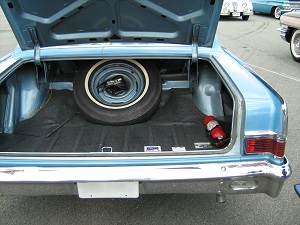
Anyway, if your car is equipped with a spare, you shouldn’t just ignore it. Tires have a shelf life, and time will take its toll on any tire, including ones that are never on the ground. Even brand-new tires have a sell-by date; the industry agrees that tires that are older than six to eight years old are probably unsafe due to degradation of the rubber. Your spare can sit in the trunk or under the vehicle and dry-rot over time, and even if it doesn’t, it can lose air to the point where it’s useless.
If your vehicle has a full-size spare, it’s a good idea to include it in the tire rotation schedule, actually putting it on the pavement from time to time. If not, at least check on the poor old lowly spare and let it know that someone cares about it. The alternative, after all, is being stuck by the side of the road with a flat tire and a flat, worthless spare both.